Mary Gharagozlou, the “Grand Dame” of Persian Arabians, died 15 years ago. It was then, that I was in Iran for the first time. Now it was time to find out, if her legacy, the Iranian Asil Arabians, has survived.
Unfortunately, I was a couple of days too late on my first trip to Iran to meet Mary Gharagozlou in person, but it can be felt until today, that she was a very special woman. The Asil Arabians of Khouzestan were her passion, her purpose in life and she was the driving force behind the recognition of these horses by WAHO.
A Future without Mary?
When Mary died in September 2001, there was a big question mark over the future of the Iranian (or Persian) Asil Arabian horses. Without her energy and knowledge, would this population survive unaltered, pure and genuine? To find an answer, I arranged for a trip to Khuzestan with the help of my German-Iranian friend Katharina Gottstein-Ghalavand and her daughter Katajoun Ghalavand and husband Shahab. Together, we travelled for three days, visiting about 15 breeders and inspected just over 80 horses. Add those of Katharinas extended family, it makes about 90 in total. This gave me a glimpse of the arduous work, Mary Gharagozlou had undertaken, to inspect all the horses that were registered in the first two studbooks (1652 of which 1066 were Iranian Asils), more even, she took notes of their markings, blood samples, branded the horses and established their history and parentage by talking to breeders and owners. And all this took place in the 1970es, when Khuzestan was not yet fully “developed” with roads and all. Many places were only accessible on horseback, even camel. Our trip also showed me, that breeders don’t have big numbers of horses – a breeder with five mares is already considered a big one.
Inspection Tour in Khuzestan
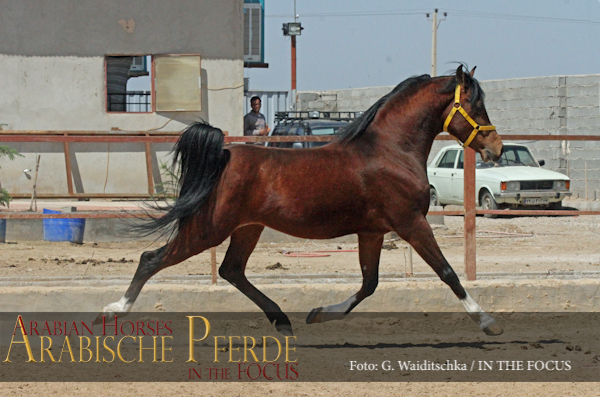
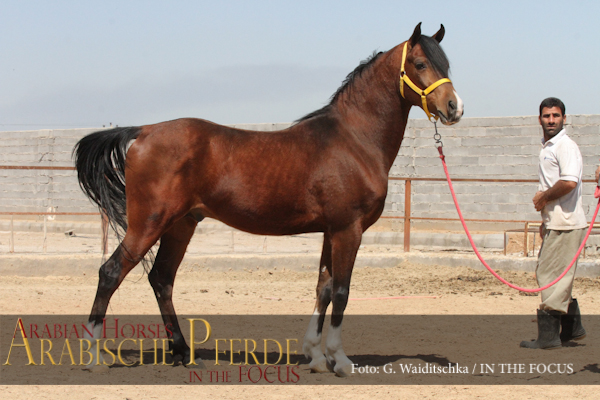
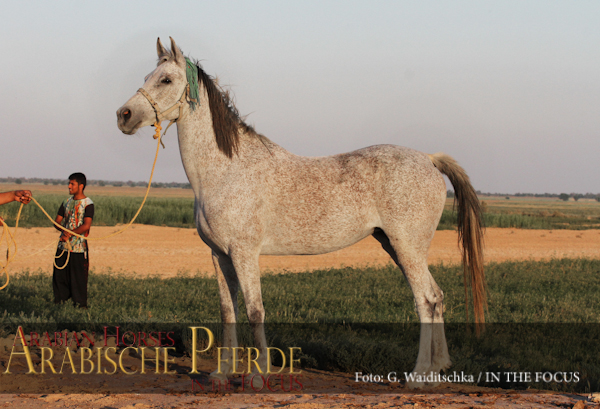
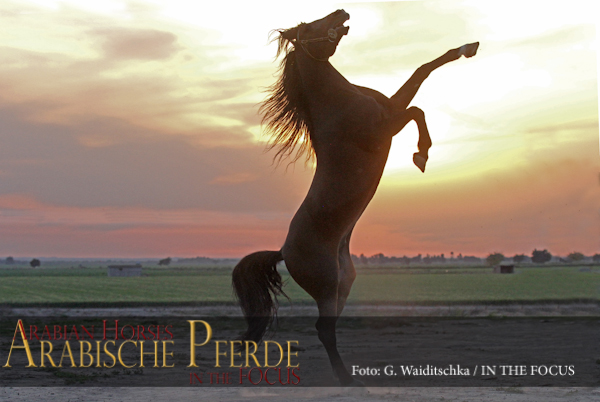
We were lucky, as spring 2016 had been unusually wet. Khuzestan was green, and most of the horses looked well fed with shiny coats. Quite often, we met the mares out in the fields, sometimes pegged to the ground, sometimes just roaming around. No fences, no shepherds – but there is no reason for them to wander off too far, and somebody would always know where they are. The stallions, however, have a different life – usually confined to the stables and a rather small paddock. Occasionally, they might be taken out for a ride. Yet, I was always amazed, how gentle they are and it often needed some tricks to make them look alert and a little bit “showy”.
Rare Strains and Bloodlines
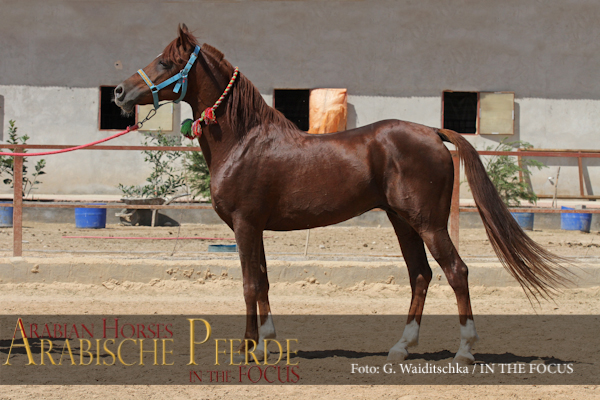
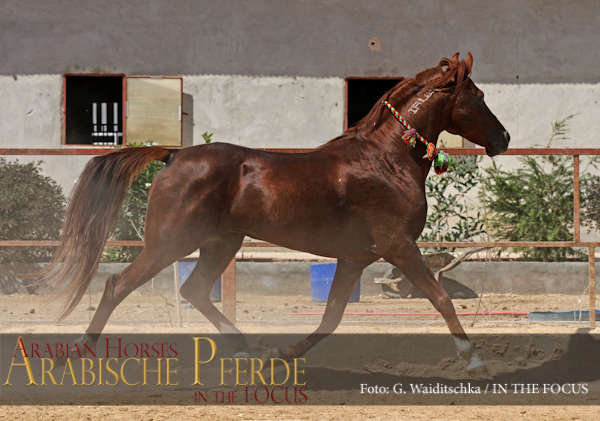
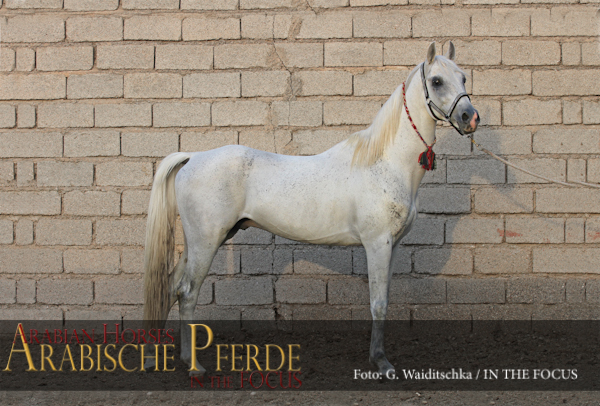
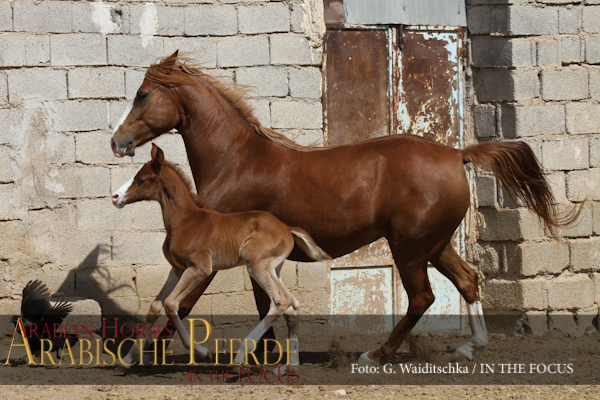
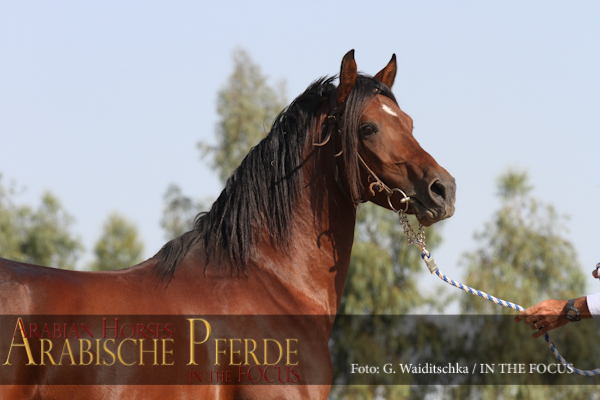
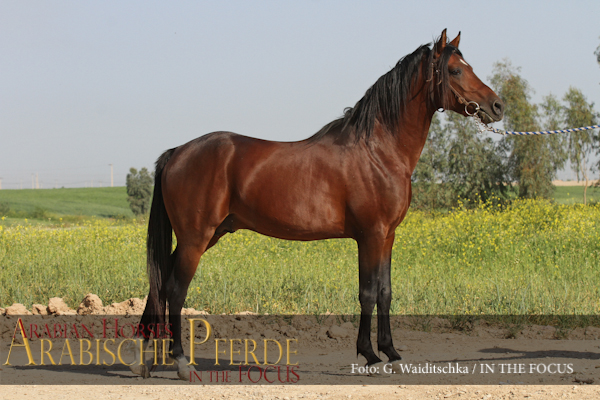
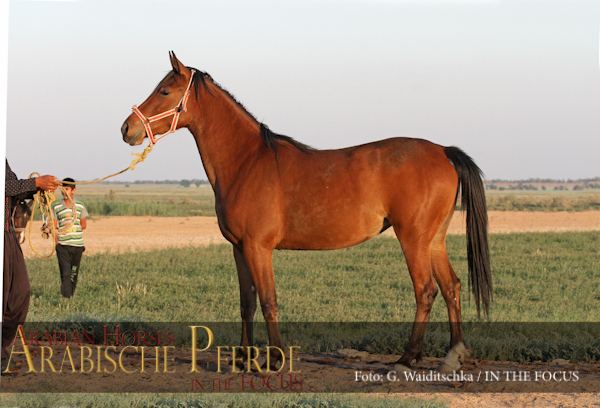
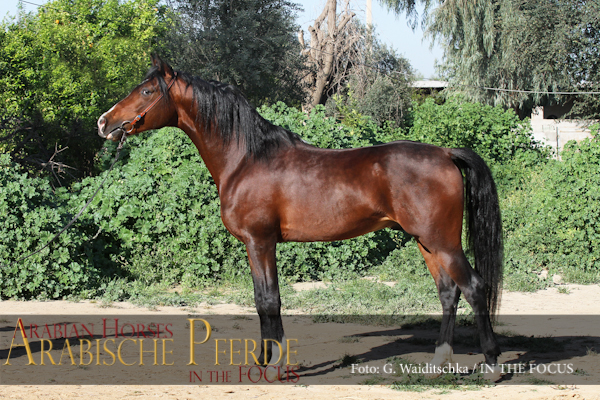
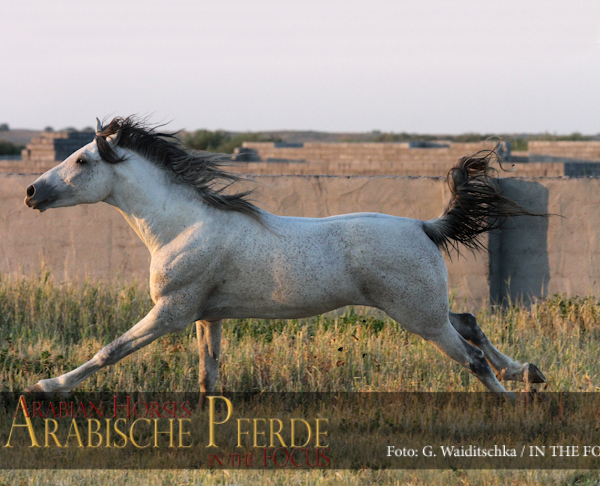
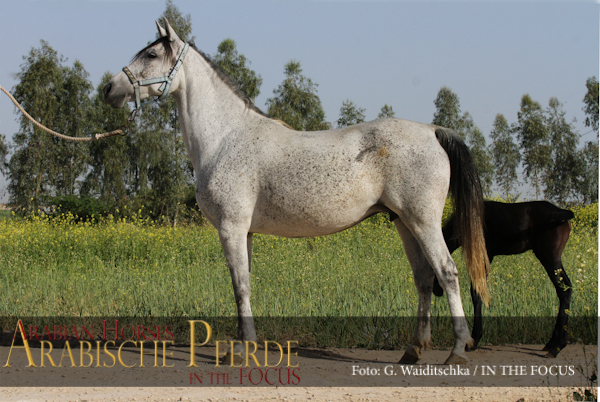
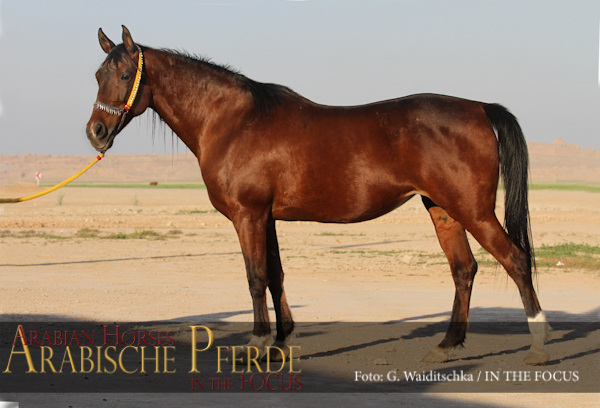
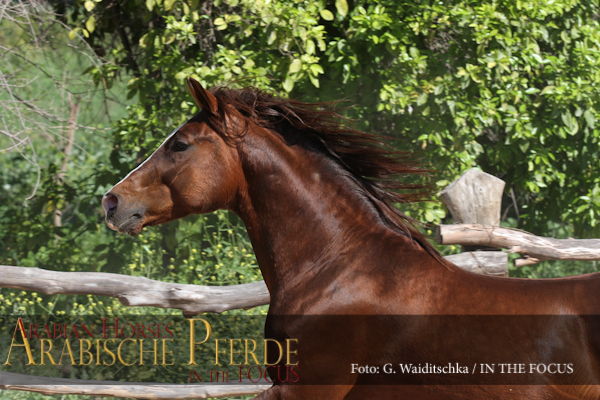
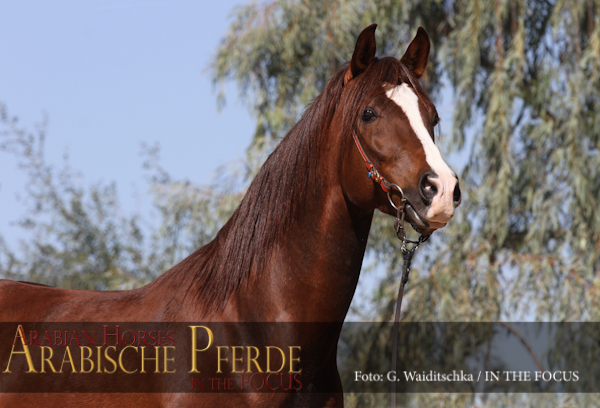
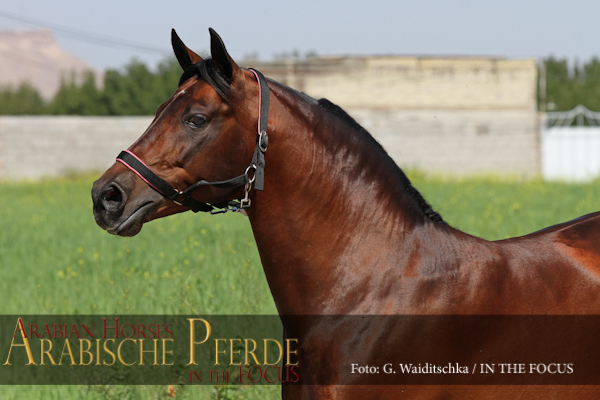
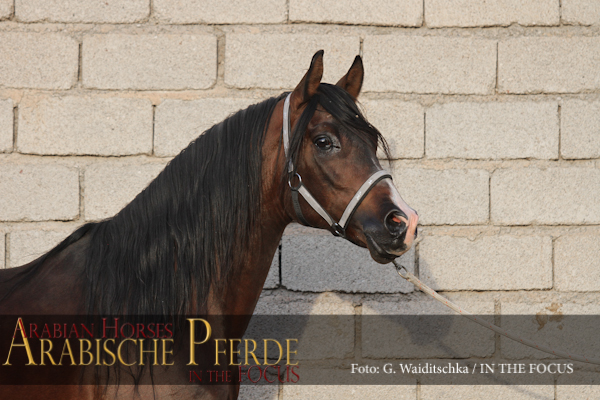
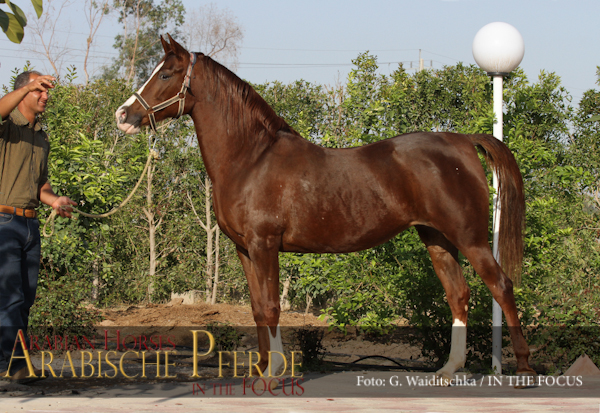
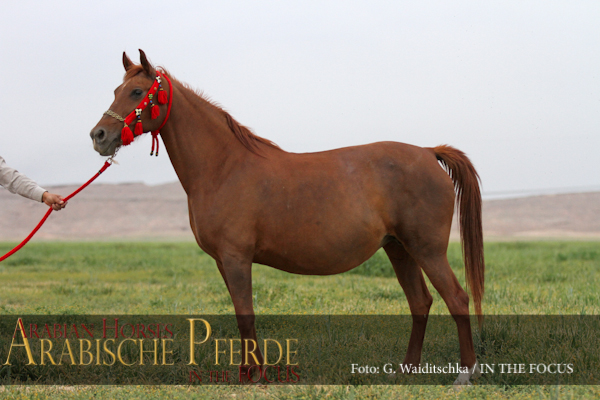
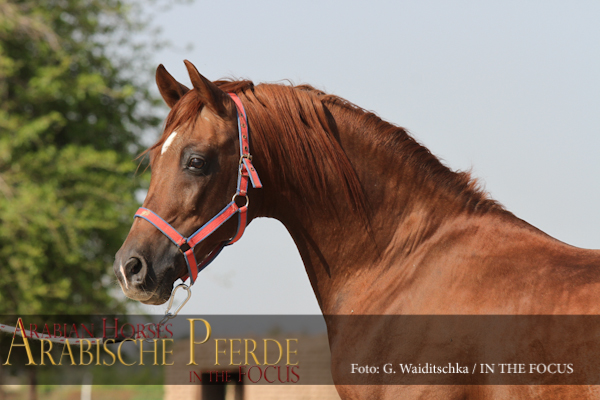
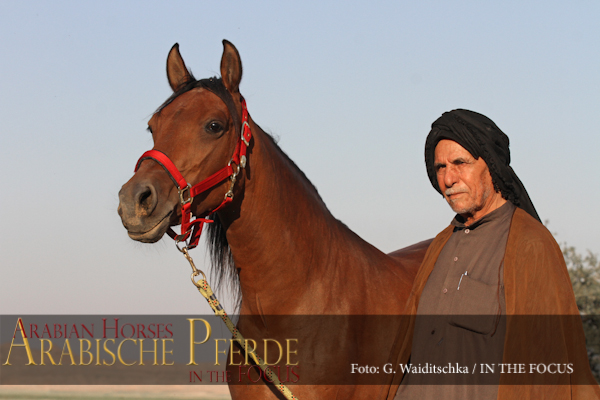
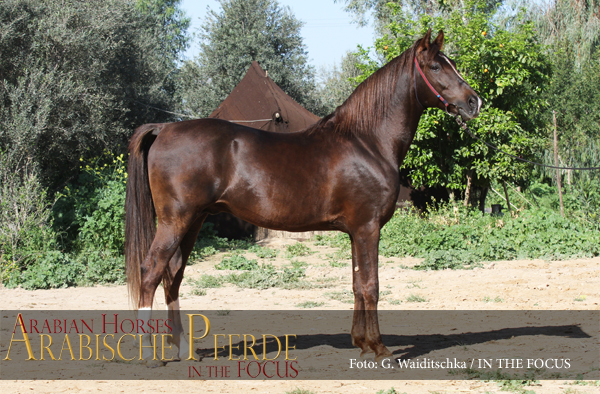
I have often been asked, how do these Iranian Asils look. Well, there is no simple answer, as they come in all shapes and types. From compact, with a short body and neck – the latter often rather fat and underslung, yet with the “mitbah”, a free throatlatch, to long lines and elegant necks. Their bodies are often good, although they tend to be soft and weak in the loins. I even saw a number of horses that were significantly higher in the back than the front. Also, the hindquarter vary to a great extend from long and strong, to short with a pointed croup. Generally speaking, one could state that the legs are rather strong, with defined joints, and good, wide hooves. I am not saying that all the legs are always “correct”, because I have seen a clubfoot, problems in the angles (fetlocks and hocks) and alignments. With regards to the size, I haven’t taken any measurements and I reckon that the size varies, but mostly it is around 1,50 m, with +/- 5 cm. When it comes to the “head”, this probably differs most: It is all there in the population, from big expressive eyes to small and almond shaped ones, from big, fine and flaring nostrils to fleshy and narrow ones, from straight profiles, to slightly concave and even slightly convex profiles. But then, have a look at old pictures of Bedouin horses, they also display a big variety in shapes and types, something we tend to forget because we are nowadays mainly exposed to the “one and only” showhorse type.
So, what is the conclusion? Although the population is rather small and includes less than a thousand active breeding animals (mares and stallions), the variety appears to be rather big, which may give a hint to the genetic diversity in this group, too. Another indicator in the same direction is the rather big number of strains present in Iranian Asils, some of which are only known in Iran and do not exist outside the country.
Arab Tribes in Khuzestan
As by definition, the Arabian horse is the product of the nomadic tribes of Arabia, the Bedouins, that wandered the Arabian Peninsula, from Central Arabia to as far North as Mesopotamia, the land between – and adjacent of – the rivers Euphrates and Tigris.
However, it is not common knowledge, that there is an Arab population, also in today’s Iran, especially in the province of Khuzestan, next to the Iraqi border. Some historians believe, that these Arabs are the descendants of some Bedouin tribes that arrived in Khuzestan from the Arabian Peninsula as early as the Sasanian Period (224 to 651 AD). Another wave of mass immigration occurred in the 7th Century with the spread of Islam. During the 10th century, the Asad tribe moved to Khuzestan, in the 16th century it was the Ka’b tribe who settled on both sides of the Karun River, near today’s Khorramshahr and Shadegan. The other tribes that moved to Khuzestan are the Beni Lam, Beni Saleh, Beni Tamim, Al-Kamiss – known as horse breeding tribes -, and others.
Count Rzewuski, who travelled Arabia in 1819 – 1823, give the tribes of Khuzestan as El Kathir [El Kassir], Beni Saleh, El Arouf and El Hamash, as well as the Beni Lam around Basra, at the conjunction of the Euphrates and Tigris rivers. Austen Henry Layard, in his book “Discoveries in Niniveh and Babylon” (1853) wrote: “the best known [horses] are the Wathna Khersan, so called from the mares being said to be worth their weight in gold; noble horses of this breed are found amongst the Arab tribes inhabiting the districts to the east of the Euphrates, the Beni Lam, Al Kamees, and Al Kithere.” Interesting is the fact, that one of the most important and most cherished strains of Iranian Asil horses – ’til today – is the Wadnan Khersan.
In all the countries of origin of the “Asils” or Desertbred horses, they are defined by their strains. This was not different in Persia and today’s Iran. Here, as well, some Arab tribes or families are known for certain strains, e.g. the Hamdani Semri and Saglavi Djedran strains are known to have come with the El Kassir tribe; the Wadnan Khersan strain is associated with the Mir tribe; Koheilan Adjuz – Kaab tribe; Hetli (a Koheilan) – Jassemi tribe; Saglavi – Beni Lam tribe, etc. For all the strains, their history is known, e.g. the Hamdani strain comes from the El Kassir tribe, of which Sheikh Hajat was the leader when Mary Gharagozlou did her investigations. He declared that the Hamdani came into the El Kassir tribe during the lifetime of Sheik Kout, his sixth ancestor (i.e. six generations back), and that before, they belonged to the ancestors of Mobarak Ibn Sabah, the (then) Sheikh of Kuwait. Another example are the Nesmani, which are only found in Iran. However, they trace back to the old Arab tribe of Beni Lam in today’s Iraq (so do the Hadban, Shuwayman and Wadnan strains).
Competition with Show Horses
I have been asked several times on this trip, is it worth maintaining the Asil Iranians as a separate population, or should we crossbreed them with the “modern” horses coming from abroad. My answer is clear: This population is unique, it is a living cultural heritage and a genepool, that once diluted by crossing with modern show horses, will disappear forever.
The threat is imminent: Over the last few years, a huge number of show and race horses has been imported to Iran, between 2008 and 2014 it was more than 700 – this is approximately as many as there are Asil Iranians in total. But the “problem” of introducing “outside blood” into this exclusive genepool is much older. In 1974, three horses from the USA were imported, the stallion Aegion Roos and two mares. Especially the stallion, a Skowronek descendant, had great impact and changed the “type” quite significantly. Other imports followed in 1992: Three Egyptian mares and the stallions Hakim and Mobarak, the latter bred by Dr. Nagel came to Iran. Mobarak was a gift to Mary Gharagozlou and was extensively used in breeding. However, these imported horses are not considered as “foundation stock” of the Asil Iranians, even though, Mary Gharagozlou approved Mobarak and used him herself in breeding. Of course, one could argue, that a Straight Egyptian is not much different to the Asil Iranians when it comes to their history, except, that the breeding goal was different: The Egyptian horses were selected for their beauty, the Asil Iranians for their usefulness as a riding horse. As a result of cross-breeding with these imported horses, of the horses entered in Studbook Volume 1, only about half were Asil Iranians. In Volume 2, it was different, because this included a group of Asil Iranians, newly accepted by WAHO in 1999. But since then, the number of Asil Iranians is declining with each new volume of the studbook. So they need support.
And indeed, already in Mary’s time, she thought about ways to promote the Asil Iranians, and festivals, endurance rides and races especially for these horses were organised. About 10 years ago, the Iranian Equestrian Federation joined ECAHO and started to organise ECAHO-shows. Of course, with the same judges and the same judging system as in Europe and the Middle East. This inevitably gave a boost towards “show horses” and although today, there are shows for “modern show horses” and other shows for “Iranian Asils” – similar as we have shows for “Straight Egyptians” – there is a great danger that using the same judges and the same system that created the modern show horse, will change the Iranian Asil into a “want-to-be show horse”.
However, having said all this, there is no reason, why Asil Iranian stallions should not cover mares of modern (western) bloodlines. They can give them better movements, stronger bones and a docile character – if that is wanted. But considering the limited number of good quality broodmares, it should not be encouraged to cover pure Asil Iranian mares with stallions of other populations. It would therefore be helpful for Iranian breeders to develop clear guidelines for measures, that are beneficial for the improvement and conservation of this population.
Preservation Breeding
It is a dilemma, all preservation breeding programs have: To find the right tools that support the strengths of this certain group. The strength of the Asil Iranians are clearly best felt under saddle – they are hardy and tough, sure-footed, clever and skillful and have stamina. The stallions used for trail riding by Katharina Ghalavand and her family carry their riders across the mountains, just as it was in the old days, when the Nomads were moving from their winter camp in the plains of Khuzestan to their summer camps in the Zagros mountains. To do so, horse and rider have to cross mountain passes at 3000 m, covering 300 km (in the old days it was even more) in about 5-6 days. This seems to be the discipline, where Asil Iranians are at their best. Additionally, it fits their heritage. Therefore, the emphasis should be clearly on riding, i.e. endurance, trail riding or racing. Maybe in combination with an assessment of the conformation of the horse, but not in “show style”.
Unfortunately, endurance riding, although it took off some years ago, was abandoned again, due to abuse (doping). In racing, the Asil Iranians are no longer “alone”, as French and Russian bloodlines have found their way into Iran. The new concept of HARC could be a chance to give the Asil Iranians a protected “playing field”, provided the races are long enough to select as winners those with the best stamina.
Outlook with Mixed Feelings
One thing came as a surprise to me: The prices for an Asil Iranian are rather high! A good stallion may well be priced at 30.000 €, a lot of money in a country, where the average income is 400 € per month or even less in rural areas. Maybe it is due to the limited number of horses available on the market – that which is rare, has its price. And maybe it should be kept this way. With the help of a population geneticist, it should be possible to determine the size of the population that is needed to avoid inbreeding by maintaining the strains and not losing them. Inbreeding can become problem, even if there is no lack of alternatives, but distances, personal preferences, “fashion stallions”, etc. gain the upper hand in the breeding decision. Here, education of the breeders is needed. Apart from that, artificial insemination with fresh or frozen semen or embryo transfer are presently not allowed in Iran.
About 180 years ago, the horses of the Arab tribes in Persia were first mentioned by European travellers. Thanks to Marys tireless efforts, the first Asil Iranians were recognized by WAHO in 1975, with an additional group of approved horses of Khuzestan in 1999. Until recently, Iran was more or less closed off from outside influence, may it be horses of other bloodlines, or may it be ideas, such as showing (in the sense of “showbizz”). It would be a shame to loose a genepool, that is so close to the origin, the Bedouin horse, as can be. Let’s hope the Iranian breeders will find a way to maintain Marys legacy in the spirit of their forebears for future generations.
Gudrun Waiditschka